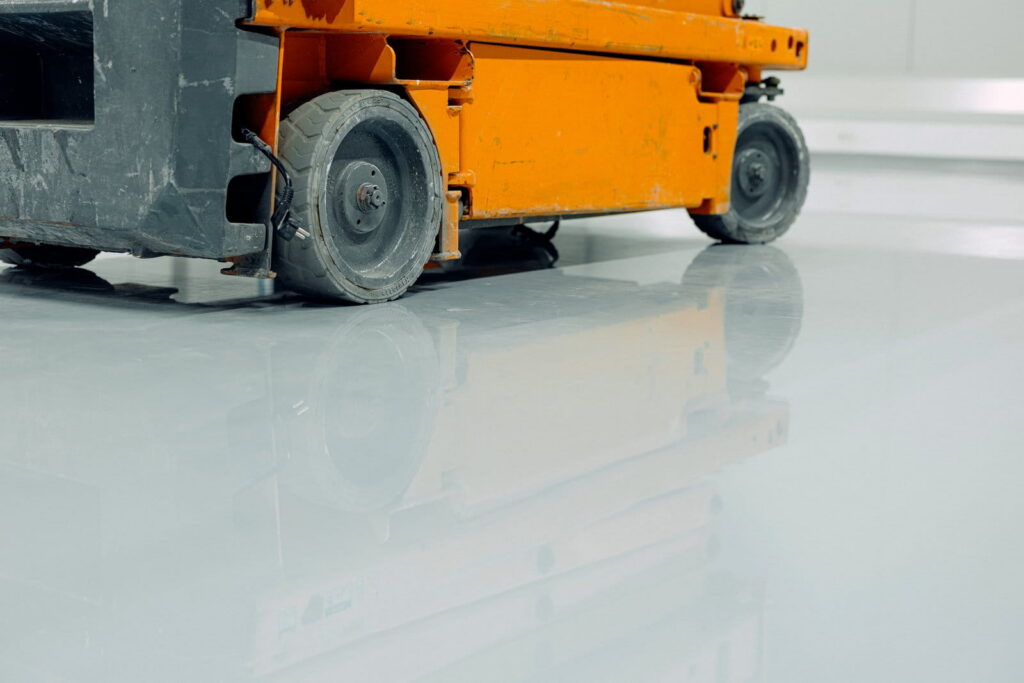
If you operate a distribution centre, factory, warehouse, or even a large retail store, it is likely that your floor takes a daily beating – and not simply from the relentless onslaught of booted human feet. Forklift trucks, pallet trucks, racking systems, and heavy machinery all put intense stress on the surface beneath them. And so a common and very sensible question is: can resin flooring actually handle that kind of punishment?
Spoiler alert: the short answer is yes – when the right system is specified and installed correctly. Let’s unpack what that really means.

Load, Traffic, And Impact In Industrial Spaces
Heavy-duty commercial and industrial environments place three main demands on a flooring system:
1. Static loads: constant weight from machinery, racking, or stored goods
2. Dynamic loads: moving traffic such as forklifts, reach trucks, and pallet jacks
3. Impact and abrasion: dropped pallets, turning wheels, braking forces, and vibration
Not all resin floors are the same, and suitability depends on matching your floor system to these demands. This is where working with an experienced resin flooring contractor, such as Advanced Resin, will make a critical difference to how your investment stands up long-term.
Why Epoxy Flooring Performs Well Under Forklift Traffic
One of the most popular solutions for heavy use warehouse and storage areas is industrial epoxy flooring. This is for several reasons:
- High compressive strength: Epoxy resin floors are designed to withstand substantial weight without deforming, making them suitable for racking legs, plant equipment, and parked machinery.
- Excellent abrasion resistance: Repeated forklift movements, turning wheels, and braking won’t wear the surface away when the correct epoxy system is used.
- Strong bond to concrete substrates: Professional surface preparation integrates the epoxy as an integral part of the slab, reducing the risk of delamination under traffic.
- Seamless construction: With no joints to crack or lift, epoxy flooring avoids many of the failure points seen with tiles or concrete repairs along forklift routes.
Load Capacity: Thickness And System Choice Matter
A common misconception is that any epoxy floor will handle heavy machinery. In reality, system build-up and thickness are crucial determining factors in how well a resin floor stands up to forklift traffic. So, what thickness do you need for your warehouse?
- Thin coatings (1–2 mm): Suitable for light industrial traffic (e.g. hand pallet trucks, trolleys/carts, and light duty electric pallet movers), but not ideal for continuous forklift use.
- Self-smoothing epoxy (2–3 mm): Good for medium-duty areas with regular vehicle movements. The differences between ‘medium duty’ and ‘heavy duty’ concern frequency and intensity.
Forklifts may be present, but they are not operating continuously all day, and not under heavy load.
- Heavy-duty epoxy screeds (4–6 mm or more): Designed specifically for high intensity forklift traffic, pallet trucks, and heavy machinery, more or less continuously around the clock.
In high-impact areas such as distribution centre loading bays or turning circles, specialist resin screeds or hybrid systems may be recommended to increase the impact resistance.
What Next?
Epoxy resin flooring systems are widely used in warehouses, logistics hubs, manufacturing plants, and distribution centres precisely because they are engineered to handle forklift traffic, heavy static loads, impacts and abrasion, and long operational hours. However, the key is choosing the right system for your environment and having it installed by experienced resin flooring contractors who understand industrial demands.
If you’re assessing your flooring options for a high-traffic facility, please get in touch with Advanced Resin today to discover the benefits of epoxy flooring for warehouses.
Image Source: Envato